| variable | label | type | options | min | max |
|---|---|---|---|---|---|
| id | Participant ID | string | |||
| age | Age in years | numeric | 16 | 130 | |
| dob | Date of birth | date | 1900-01-01 | 2006-01-01 | |
| employment | Employment status | radio | 1, Full-time 2, Part-time 3, Casual 4, Retired |
1 | 4 |
Where do data come from?
And other difficult questions your children might ask
Ben Harrap
Acknowledgement
About me
Doing data things since 2017:
- Randomised trials
- Observational studies
- Longitudinal surveys
- Administrative data
- Data linkage
Currently work at Yardhura Walani on the Mayi Kuwayu Study
Mayi Kuwayu
The largest national study of Aboriginal and Torres Strait Islander culture, health, and wellbeing.
- ~12,000 responses to Wave 1
- Currently at the tail-end of Wave 2
- Questionnaire provided in paper and online formats
- Indigenous Data Sovereignty and Governance
- Won the NHMRC David Cooper Clinical Trials and Cohort Studies Award
Getting data
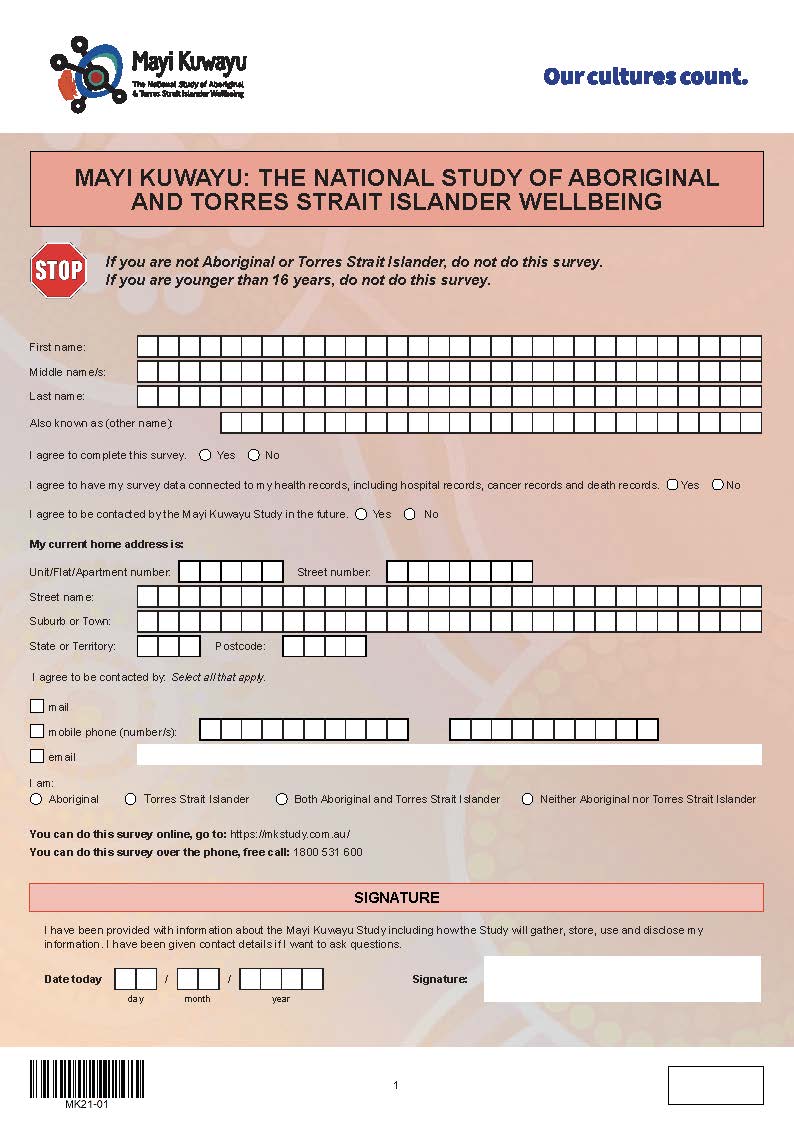
Daddy, where do data come from?
The birds and the bees
Several consenting adults get together and decide to make a…
The birds and the bees
Several consenting adults get together and decide to make a…
Baby’s first steps
- They’re very tall for their age
- (it’s too long)
- What an interesting outfit
- (the design has issues)
- They’re gorgeous
- (perfect, good to go)
- It looks just like you
- ???
Time to collect data
- Physical mail
- Initially a sample of Medicare database
- Here’s a copy for a friend!
- Electronic mail
- Past participants
- Newsletters
- Social media
- Conferences
- Community engagement
- Partners
- Roadshow
Paper responses
The first one arrives, up it goes
More appear, yay!
Wow when is it going to stop
Much like drawings on the fridge, every one is precious
Unlike those drawings, every response is retained and stored somewhere
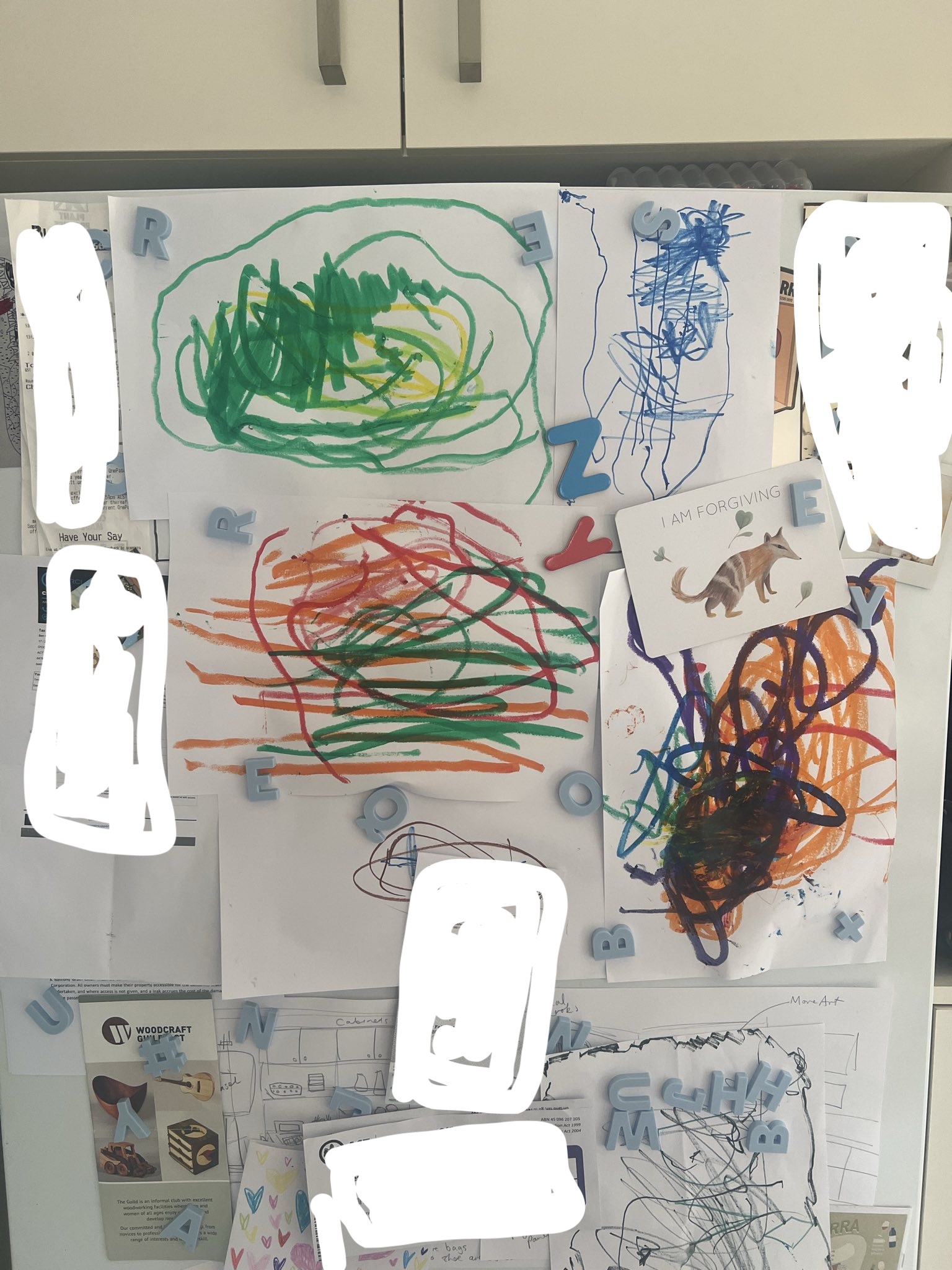
Please hold while data is being entered
Online responses
We need a platform that does
- Questionnaire design
- Survey administration
- Data management
Online distribution changes things
- More control (better data) 🙂
- No data entry time (less work) 😀
- Easier to stop (less data) 😕

Please hold while data is being entered
Digitising data
Daddy, how do you turn the paper questionnaires into numbers on the screen
Computer has a go
- Checkboxes
- ✅
- Radios
- ✅✅
- Handwriting
- åååååååååååååååååååååå
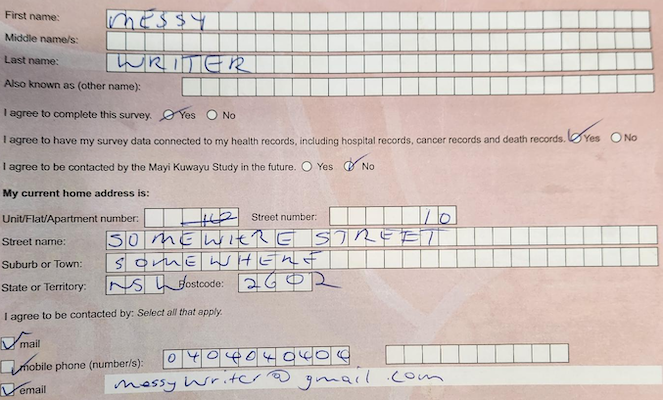
Human has a go
- Check the computer’s work
- Fix mistakes
- Enter hand-written text
- Approx 10min per questionnaire
- 6 per hour
- 20 per day (breaks required!)
- 100 per week…
- That’s a lot of people hours!
Human has another go
- Data auditing
- Failure of a validation rules
- Unmatched addresses
- Refer back to scanned questionnaire (!!)
- Provide updated value
Nobody has a go
Cleaning data
Daddy, can we give the data a bath tonight?
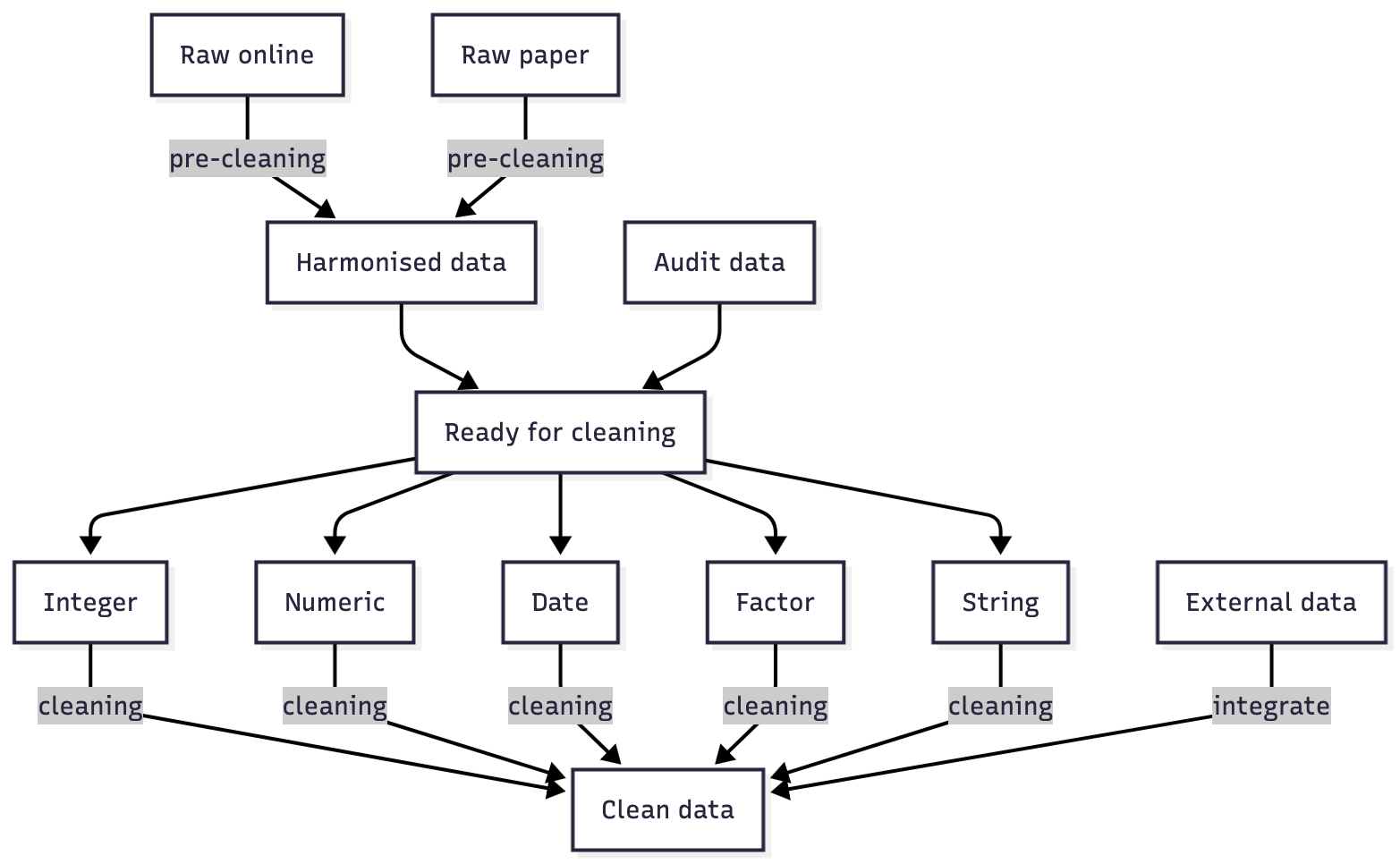
It’s this simple

Start reading early
The data dictionary is essential for cleaning and documentation:
- Splitting by type
- Automating validation
- Labelling values and variables
Use the dictionary instead of hardcoding values!
Example
across(
  .cols = any_of(dictionary |> filter(type %in% c("numeric", "integer")) |> pull(variable)),
  .fns = \(x) {
    min <- dictionary |> filter(variable == cur_column()) |> pull(minimum) |> as.numeric()
    max <- dictionary |> filter(variable == cur_column()) |> pull(maximum) |> as.numeric()
    if_else(
      condition = between(as.numeric(x), min, max),
      true = x,
      false = "-777777",
      missing = NA
    )
  }
5 minutes until bath time!
- Read in data
- Harmonise the data
- Check variable names
- Apply consistent coding
- Apply exclusions
- Repeat entries
- Empty responses
- Incorporate audits
- Get cleaning

Can you count to 010?
My favourite month is…
Can you write your name?
Playing with friends
Deriving from existing data
- Back page text
- Transcription and coding
- Survey weights
- Standardised variables
- Commonly used demographics
- Validated measures
Incorporating external data
- Address/geography
- G-NAF/Geoscape via API
- ABS data products
- Check for pre-existing matched addresses
- (Internal) data linkage
- Within- and across- wave responders
- Across studies
- Unique identifier
Nearly time for bed
Data about data
Daddy, have you thought about using metadata to inform the questionnaire redesign process?
Missingness
| id | name_first | name_last | age | x1 | x2 | x3 | x_text | y1 | y2 | y3 | z1 | z2 | z3 |
|---|---|---|---|---|---|---|---|---|---|---|---|---|---|
| 1 | Tom | Smith | 62 | 1 | Lorem | 1 | |||||||
| 2 | Penny | Jones | 52 | 0 | 1 | 1 | 0 | 1 | 0 | ||||
| 3 | Trevor | 37 | 1 | 0 | |||||||||
| 4 | Ursula | Smith | 44 | 1 | Lorem | 1 | 1 | 0 | |||||
| 5 | Jenny | Jones | 0 | 1 | 1 | 0 |
| id | name_first | name_last | age | x1 | x2 | x3 | x_text | y1 | y2 | y3 | z1 | z2 | z3 |
|---|---|---|---|---|---|---|---|---|---|---|---|---|---|
| 1 | Tom | Smith | 62 | 1 | Lorem | 1 | |||||||
| 2 | Penny | Jones | 52 | 0 | 1 | 1 | 0 | 1 | 0 | ||||
| 3 | Trevor | 37 | 1 | 0 | |||||||||
| 4 | Ursula | Smith | 44 | 1 | Lorem | 1 | 1 | 0 | |||||
| 5 | Jenny | Jones | 0 | 1 | 1 | 0 |
| id | name_first | name_last | age | x1 | x2 | x3 | x_text | y1 | y2 | y3 | z1 | z2 | z3 |
|---|---|---|---|---|---|---|---|---|---|---|---|---|---|
| 1 | Tom | Smith | 62 | 1 | Lorem | 1 | |||||||
| 2 | Penny | Jones | 52 | 0 | 1 | 1 | 0 | 1 | 0 | ||||
| 3 | Trevor | 37 | 1 | 0 | |||||||||
| 4 | Ursula | Smith | 44 | 1 | Lorem | 1 | 1 | 0 | |||||
| 5 | Jenny | Jones | 0 | 1 | 1 | 0 |
| id | name_first | name_last | age | x1 | x2 | x3 | x_text | y1 | y2 | y3 | z1 | z2 | z3 |
|---|---|---|---|---|---|---|---|---|---|---|---|---|---|
| 1 | Tom | Smith | 62 | 1 | Lorem | 1 | |||||||
| 2 | Penny | Jones | 52 | 0 | 1 | 1 | 0 | 1 | 0 | ||||
| 3 | Trevor | 37 | 1 | 0 | |||||||||
| 4 | Ursula | Smith | 44 | 1 | Lorem | 1 | 1 | 0 | |||||
| 5 | Jenny | Jones | 0 | 1 | 1 | 0 |
Who what where why when
Check invalid responses
- Wording
- Response options
- Context
- Layout
- Scanner
Check valid responses
- Missingness
- Response options
- Question topic
- Question number
Time for bed
Time for bed
- Big job
- Get the data dictionary sorted first
- Write generalisable code
- Look at the data
- Write tests

Slides available from https://benharrap.github.io/workshops/2025-where-do-data-come-from/slides.html